

 comments
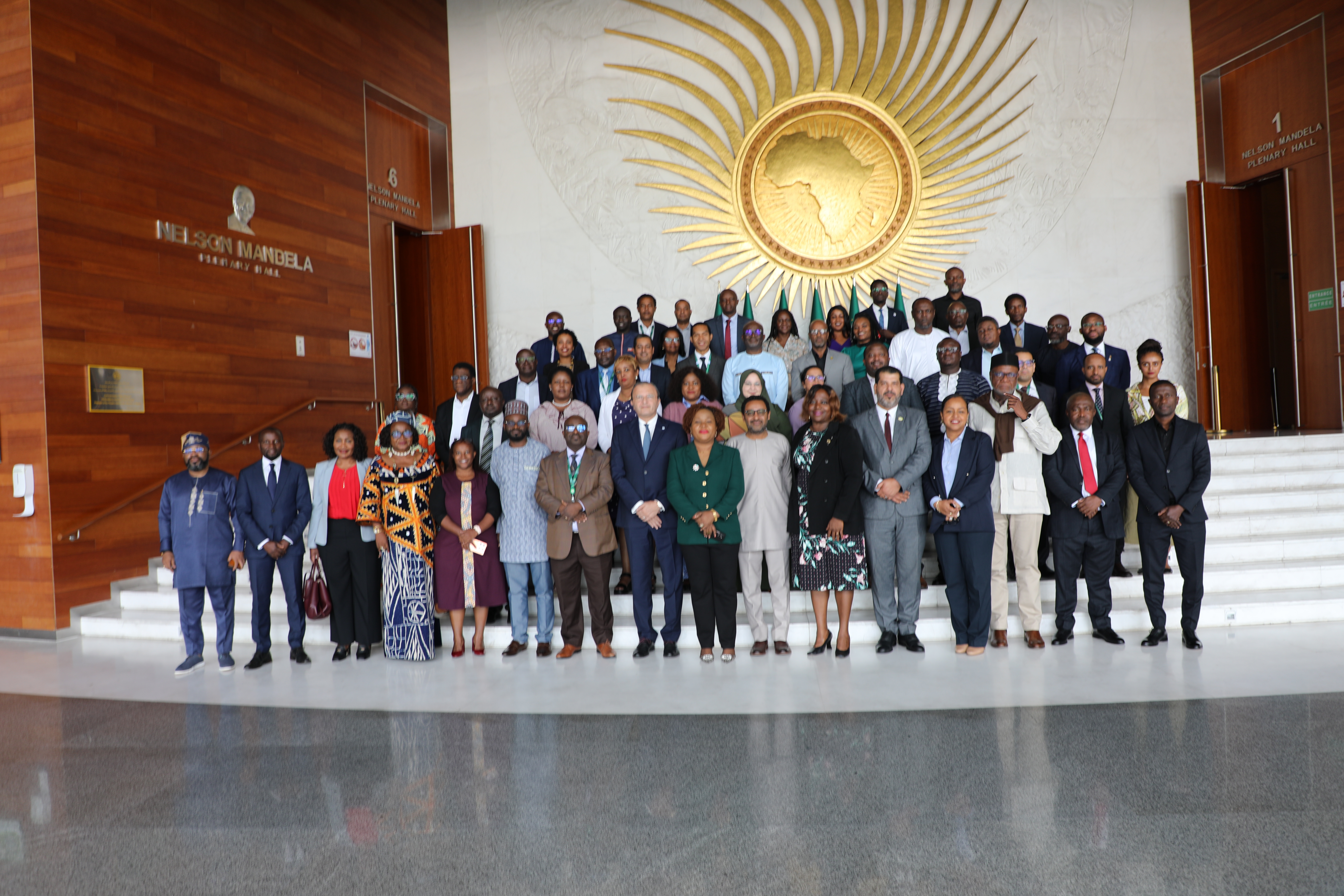
Distinguished representatives of Regional Economic Communities and Regional Mechanisms, representatives of AU Liaison Offices and Representatives, AU organs and institutions, partners, experts, colleagues, ladies and gentlemen,
Good morning, and welcome to the African Union Commission.
1. On behalf of the Political Affairs, Peace and Security Department, it is my honour to welcome you to this Technical Consultation on the AU Conflict Prevention Framework and the strengthening of the Continental Conflict Prevention Architecture.
2. This consultation comes at a pivotal moment in the evolution of the African Union’s conflict prevention agenda. At the same time, our discussions today do not begin from a blank page. Conflict prevention has been central to the African Union’s peace and security mandate since the establishment of the Union.
3. The Protocol Relating to the Establishment of the Peace and Security Council laid the institutional foundation for the African Peace and Security Architecture (APSA). It established, among others, the Continental Early Warning System and the Panel of the Wise, alongside mechanisms designed to enhance the Union’s capacity for conflict prevention, preventive diplomacy, conflict management and resolution.
4. Over the years, the Commission has progressively built on this foundation. We have strengthened the Continental Early Warning System; expanded preventive diplomacy and mediation capacities; established AU Liaison Offices; reinforced the Panel of the Wise and related mechanisms; and developed approaches to address both immediate conflict risks and the underlying structural drivers of conflict. We have also advanced structural conflict prevention tools to support Member States in identifying vulnerabilities, strengthening resilience and translating assessments into preventive measures.
5. Collectively, these initiatives have provided the African Union with a substantial normative, institutional and technical foundation for conflict prevention. Yet experience and successive reviews have shown that institutions, frameworks and tools alone are not sufficient. Effective prevention depends on how these mechanisms connect with one another; how information flows through the system; how Member States and RECs/RMs are engaged; and, ultimately, how early warning and analysis translate into timely political and preventive action.
Ladies and gentlemen,
6. At its 39th Ordinary Session in February 2026, the Assembly recognized the urgency of addressing the persistence and increasing complexity of conflicts and evolving threats across the continent. It therefore mandated the convening of an Extraordinary Summit under the theme: “Strengthening Mechanisms for Conflict Prevention and Resolution in Africa.”
7. This Extraordinary Session, held in Luanda, Republic of Angola, from 29 to 30 August 2026, provided Heads of State and Government with an opportunity to undertake a strategic assessment of the effectiveness of existing continental mechanisms for conflict prevention and resolution. It reaffirmed African ownership of the governance, peace and security agendas, and underscored adherence to the principles of the Constitutive Act of the African Union.
8. A central proposition emerged clearly from the Luanda process: the challenge facing the African Union is not the absence of mechanisms, but the insufficient implementation, coordination and political utilization of the mechanisms that already exist. The priority is therefore not to create new institutions, but to make our existing capacities more anticipatory, better coordinated, adequately resourced and consistently implemented.
9. This provides an important point of departure for our consultation today.
10. The Luanda process has moved us beyond diagnosing challenges towards determining how our conflict prevention system should function in practice. It has provided renewed political direction for strengthening the AU Conflict Prevention Framework; enhancing coherence between APSA and AGA; reinforcing early warning and strategic foresight; and improving the connection between analysis, decision-making, preventive diplomacy and early action.
11. Our task over the next two days is not to reopen political decisions already taken, but to translate that political direction into practical technical and institutional arrangements.
12. We must therefore consider how a renewed AU Conflict Prevention Framework can serve as an overarching architecture connecting structural prevention, governance, early warning, strategic foresight, preventive diplomacy, mediation and other forms of preventive engagement. We must also determine how the tools and capacities being developed or strengthened—including CAPRI, the Continental Early Warning System, the Continental Threat Assessment and Risk Mapping Tool, and the Trigger Model—can complement one another and function as parts of a coherent system rather than parallel mechanisms.
13. This architecture cannot be centred solely on the African Union Commission. Member States must remain at the heart of conflict prevention. Continental mechanisms should reinforce national ownership and support national prevention capacities. Equally, the proximity, experience and capacities of RECs/RMs are indispensable. Effective prevention requires stronger connections between national, regional and continental levels, supported by clearer arrangements for information-sharing, analysis, decision support and preventive engagement.
14. We must also utilize the considerable expertise that exists across AU Liaison Offices, AU organs, institutions and specialized mechanisms. The objective is not to create new structures unnecessarily, but to strengthen coherence, complementarity, interoperability and coordination among existing mechanisms and those newly mandated.
Distinguished participants,
15. I encourage you to use these two days for frank, practical, forward-looking and solution-oriented discussions. By the conclusion of this consultation, we should aim to have greater clarity on what the renewed AU Conflict Prevention Framework should encompass; how its components should interact; how Member States, RECs/RMs and AU institutions should connect within the system; what technical and institutional arrangements are required; and, importantly, what needs to happen next, by whom and within what timeframe.
16. The political direction has been provided. Our collective responsibility now is to help translate that direction into a coherent, practical and implementable continental conflict prevention system capable of supporting timely and effective preventive action.
17. I thank our RECs/RMs, AU organs and institutions, AU Liaison Offices, facilitators, experts, partners and colleagues for your continued commitment to strengthening conflict prevention in Africa.
I wish you productive deliberations and a successful consultation.
Thank you .
Posted by Abraham Kebede

We use cookies on our website and mobile app to improve content display and
overall user experience. The cookies we use do not store personally identifiable
information nor can they harm your computer.
We intend to provide you with the right knowledge on-demand at the right
time and in the appropriate format to ensure that you engage the African Union
constructively in your specific role.
If you have any questions please contact directly PAPS Digitial Support Officer at
abrahamk@africa-union.org
COMMENTS
 Opening Remarks by Mr. Issaka Garba Abdou, Head, Governance and Human Rights Division, Department of Political Affairs, Peace and Security, at the Technical Consultation on the AU Conflict Prevention Framework and Continental Prevention Architecture, September 17, 2026 | Addis Ababa, Ethiopia